

There is a quiet majesty and grace in the one who never complains and never explains.
The moment you voice your grievance, you relive the wound, give it fresh air, and invite the world to poke at it. Silence, instead, lets the sting fade in private.
It keeps your spirit uncrumpled, like a letter you never mailed

The sun does not complain about the clouds; it simply waits, and when the sky clears, no one remembers the darkness. Only the light that endured.
Explaining, too, is a subtle surrender. Every justification is a plea for approval dressed as clarity. It shrinks you to the size of someone else’s understanding. The river does not pause to explain its course to the stones; it simply flows, wearing them smooth over centuries. In the same way, a life lived with grace needs no footnotes.

Complaining hands your peace to the wind
People will invent their own stories about you, let them! The ones worth keeping will eventually see the truth without your translation, and the ones who never do, were never yours to convince.
When you refuse both complaint and explanation
Think about it, you walk through the world like moonlight on water: present, luminous, untouchable. You keep your sorrows from becoming spectacles and your victories from needing witnesses. You remain a mystery even to those who stand closest, and mystery is the last true form of dignity left to us.

Like autumn leaves that never touched the heart of the tree...
In the end, the soul that neither whines nor justifies is the soul that stays free. It answers only to itself and to whatever it holds sacred. Everything else; misunderstanding, envy, gossip, all falls away.
Living by Stoic philosophy, expressed clearly and beautifully:
- Unbreakable Inner Peace
Stoicism teaches that nothing outside your own judgments can truly harm you. Storms, insults, betrayal, illness, even death, lose their power to disturb you when you stop granting them that power. You become emotionally weatherproof. - Freedom from Anxiety and Fear
By constantly remembering what you can control (your thoughts, choices, effort) and what you cannot (other people, outcomes, reputation, the future), you stop wasting energy on the uncontrollable. Most of what people fear never happens, and the part that does is made infinitely lighter by preparation and acceptance. - Radical Self-Reliance
You no longer need the world to behave a certain way for you to be okay. Praise doesn’t inflate you; criticism doesn’t crush you. You carry your happiness inside, like a lantern that no wind can blow out. - Courage in the Face of Anything
The Stoics practiced “premeditatio malorum”, deliberately imagining the worst so that nothing takes them by surprise. Because you have already mentally rehearsed losing your job, your health, your loved ones, when difficulty arrives you greet it with a calm “Ah, there you are. I expected you.” - Deeper Enjoyment of Life
Paradoxically, when you stop clutching at pleasure and start accepting that everything is on loan (health, money, relationships, life itself), every good moment becomes suffused with gratitude. You taste food more intensely, love people more fiercely, and watch a sunset as if it might be your last, because the Stoic knows it very well could be. - Iron-Clad Integrity
Virtue (wisdom, courage, justice, self-control) becomes the only scorecard that matters. You act rightly even when no one is watching, because your peace depends on being able to look yourself in the mirror without flinching. - Immunity to Envy and Resentment
You stop comparing yourself to others because you understand that their highlight reel is irrelevant to your own practice of excellence. Someone else’s wealth, beauty, or luck is as indifferent as the weather. - Stronger Relationships
When you stop needing people to act a certain way, you can love them exactly as they are. You give without expectation, forgive without record-keeping, and speak truth without cruelty. - Clarity and Decisiveness
Stoicism strips away the trivial. You ask yourself one question before every action: “Is this necessary? Does this align with reason and virtue?” Life becomes astonishingly simple. - A Dignified Death
The ultimate test. Stoics die the way they live: without drama, without bargaining, without self-pity. Seneca, Epictetus, and Marcus Aurelius all faced their ends with the same calm they brought to every ordinary morning.
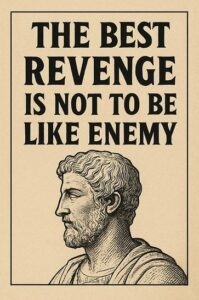
In short conclusion, Stoicism does not make life easier; it makes you stronger than anything life can do to you.
It turns victims into unshakable queens of their own inner kingdom, no matter what is happening on the outside.
That is not just a philosophy. That is a superpower
Photographs and films: want to see more of me via my clips site LoyalFans.
Wish List is a great way to show your appreciation of my blogging. Amazon money gift cards are most welcome using misskimrub@btinternet.com.
Important: the only way to book an appointment, or to ask questions is to call Miss Kim on: +44 7729 003220.
Unique to me is my linktree - a one-stop-shop for ALL my 26 links!
Miss Kim 💋

